Psychological Safety Training for Leaders: Where Most Leaders Fail (and How to Fix Yours)
You walk into the room, lay out a new initiative, and ask: "Does anyone have any questions or concerns?"
Silence.
You might assume that silence means alignment. But more often than not, it’s a symptom of the "Silence Tax." Your team isn’t quiet because they agree; they are quiet because they are calculating the social cost of speaking up. They fear looking "dumb," being judged, or—perhaps most realistically—accidentally adding more work to their already overflowing plates.
If you’ve felt a natural resistance to the term "Psychological Safety," you aren’t alone. To many leaders, it sounds like "soft" HR fluff. But in reality, it is the highest form of performance training.
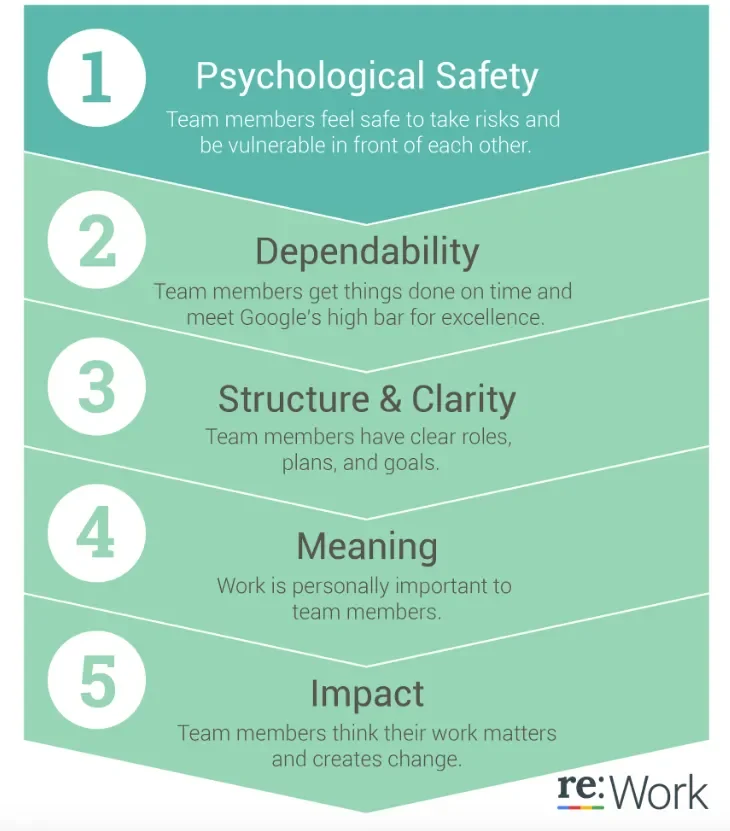
This isn't just a theory; it is backed by one of the most extensive studies on team productivity. Google’s Project Aristotle spent years analyzing 180 teams to find the "secret sauce" of high performance.
They discovered that who was on the team mattered far less than how the team treated one another—finding that psychological safety was the single most important factor in determining a team's success. Without it, even the most talented individuals fail to reach their collective potential.
Here is how we use hands-on workshops to train your leaders to move past the buzzwords and into a system that actually builds a high-efficiency team.
1. The Myth of "Softness" (Safety vs. Standards)
The #1 reason leaders put their walls up when they hear "Psychological Safety" is the fear that it means lowering standards. They worry the workplace will become a "Comfort Zone" where accountability goes to die.
The Reality: Psychological safety is not about being "nice" or lowering the bar. It is the literal engine of accountability.
Low Safety + High Standards = The Anxiety Zone. (People hide mistakes to stay safe).
High Safety + Low Standards = The Comfort Zone. (No one is challenged).
High Safety + High Standards = The Learning & High-Performance Zone.
Training for leaders must focus on this: You aren't making it "easy" for your team; you are making it safe to be honest so you can solve problems faster.
2. Recognizing your "Leadership Shadow"
Every leader has a "shadow." Even if you are the kindest, most approachable person in the office, your title carries weight.
When you speak first in a meeting, you unintentionally set the "correct" answer. When you ask a question, it can feel like an interrogation rather than an inquiry. Most training fails because it tells leaders to "be more curious" without acknowledging that the leader's very presence changes the chemistry of the room.
The Training Fix: We train leaders in a process that gets their team to open up. So leaders listen first and speak last. By holding your opinion, you remove the "shadow" from the room and allow the team’s true insights to surface.
3. Hearing the "Deep Processors" (Beyond the 3 Loudest Voices)
In most meetings, decisions are made based on the 2-3 loudest voices. This is a massive waste of intellectual capital.
Many of your most brilliant contributors are Deep Processors. They don't think "out loud"; they think deeply and need time to formulate their insights.
The Training Fix: A Process for Every Processor True psychological safety training installs a process that balances the scales. Whether someone is a high-energy extrovert or a methodical introvert, our system ensures all voices are given equal weight, time, and value.
For the Fast-Talker: It provides a structure to listen and "hold the floor" for others.
For the Deep Processor: It provides the silence and the "processing gap" needed to contribute their best work without being interrupted.
By moving away from "sitting in a circle and talking" and toward a structured, behavioral process, you ensure that the best idea wins, not just the loudest voice.
4. Tactile & Kinesthetic Training: Moving from Talk to Action
This is why we deliver our training through a hands-on workshop model. You cannot "lecture" your way into a safe culture. You have to build it through mechanics.
In our training, we use the Collaborative Safety Cycle:
Anonymous Collection: We use sticky notes (physical or digital) to separate the person from the problem. This eliminates the fear of looking "dumb" or being judged.
The Art Walk: We prioritize challenges democratically, ensuring the "quiet" voices have just as much "vote" as the loud ones.
Behavioral Scripting: We don't just say "communicate better." We build specific scripts and behaviors that the team can quickly get aligned on and test immediately.
5. The "Silence Tax" Audit
If your team is keeping quiet to avoid judgment or extra work, you are paying a tax on every decision you make. Like putting out fires that could have been prevented earlier.
Psychological safety training isn't an HR initiative; it's a debt-reduction strategy. It’s about stopping the "Silence Tax" from draining your team's time, energy and other valuable resources.
Ready to Turn Silence into Strength?
Training shouldn't be a passive experience. It should be a system that you install into your team's daily operations.
Our Psychological Safety Workshop is a high-impact, hands-on training experience designed specifically for leaders who are tired of the silence and ready for the truth. We help you identify your team's challenges and give you the tools so everyone is open to sharing freely.
Ready to see how we can help you stop the Silence Tax and start building a high-performance culture?